5 Major Water Pump Problems & Solutions In Mineral Processing
In the slurry transport phase, the water pump serves as the “heart” of mineral processing operations; its stable performance directly dictates the efficiency of the entire production line. However, due to prolonged heavy-duty operation, water impurities, or improper maintenance, pumps frequently experience sudden issues—such as leaks or insufficient pressure—which can result in hours of lost production capacity and repair costs totaling thousands of dollars. Faced with such challenges, every mineral processing manager requires the capability for rapid diagnostics and emergency response. This article delves into the causes and on-site solutions for 5 common water pump problems, empowering you to quickly pinpoint problems, restore production, and keep your equipment in optimal condition at all times.
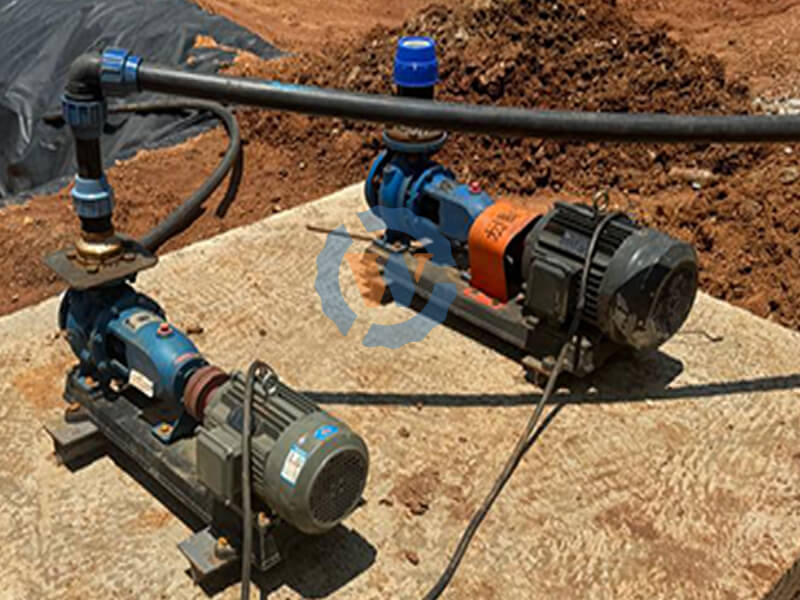
For mineral processing operators, it is essential to master the techniques for quickly diagnosing and repairing common water pump problems. This not only helps minimize losses due to downtime but also extends equipment lifespan and keeps operating costs in check.
5 Types of Water Pump Problems And Fix Solutions
Problem 1: Water Pump Fails To Draw Water / Build Pressure
Reasons
In mineral processing operations, the failure of a water pump to draw water or build pressure is the most frequently encountered issue. Beyond common triggers—such as air leaks in the suction line or a stuck foot valve—this problem is also characterized by factors highly specific to the industry. For instance, the intake strainer is prone to clogging by fine-grained ore particles and sediment suspended in high-density mineral slurry, thereby completely blocking the water intake path. Furthermore, small fragments of ore can easily become lodged in the gaps of the foot valve, preventing it from closing properly and leading to a loss of pressure. Many maintenance personnel mistakenly focus solely on repeatedly checking the electrical circuitry, thereby delaying the actual repair process.
Fix Solutions
First, shut off the power supply to the water pump. Dismantle the intake-side strainer to remove any obstructions—such as mineral residue or gravel—and ensure that the water flow path is clear. If the strainer is damaged, it may be temporarily replaced with a piece of fine-mesh wire netting. Next, inspect the foot valve; remove any lodged ore fragments and adjust the valve’s opening and closing clearances to ensure that it forms a proper seal when closed. Finally, verify that there is an adequate water supply available to ensure the pump can successfully establish the necessary suction force.
Problem 2: Water Pump Leakage
Reasons
Water pump leakage not only compromises operational efficiency but can also damage components such as the motor or bearings. Main reason:
- Prolonged transportation of acidic or alkaline slurries will rapidly corrode the rubber sealing rings at the joints, leading to seal failure and leakage.
- Looseness in the pump casing or connections—such as unsecured bolts or damaged gaskets—resulting in high-pressure water seepage.
- Damage to the bearing housing oil seal allows lubricating oil to leak into the pump chamber, causing seal failure.
Fix Solutions
First, close the inlet valve and drain any residual mineral slurry from the pump chamber. In cases of minor leakage, a corrosion-resistant sealant can be applied directly to the interface; wrapping the area with 2–3 layers of waterproof tape and tightening any loose nuts should effectively stop the leak. If the sealing rings or gaskets are corroded or cracked, simply replace them with wear-resistant sealing components. During replacement, ensure that any mineral residue adhering to the interface is thoroughly cleaned away to prevent improper sealing and subsequent leakage.
Problem 3: Abnormal Vibration During Pump Operation
Reasons
In the mineral processing sites, abnormal pump vibration is frequently linked to the feed conditions. First, significant fluctuations in slurry feed concentration—coupled with delayed adjustments to the feed valve opening—can cause the impeller load to oscillate erratically, resulting in periodic shaking of the pump body. Second, the support structures for the discharge piping situated above the pump are susceptible to being dislodged by falling chunks of ore; the resulting pipe instability transmits vibrations to the pump body, triggering resonance. Third, fragments of hard minerals—such as quartz or iron ore—can become lodged in the clearance between the impeller and the pump casing; this disrupts the impeller’s dynamic balance, leading to severe, pulsating vibrations during operation.
Fix Solutions
First, switch the water pump to a low-power operating mode and monitor the concentration of the incoming feed. Adjust the opening of the feed valve to ensure a uniform and stable flow of slurry. Subsequently, inspect the piping supports and the pump base bolts; tighten any loose bolts and apply temporary reinforcement to any deformed support structures. If the vibration persists after these adjustments, the pump must be shut down and the casing disassembled for inspection to remove any mineral fragments lodged within the impeller clearance.
Problem 4: Water Pump Impeller Wear/Damage
Reasons
The primary causes of impeller damage are erosion by slurry particles, cavitation damage, or the use of materials lacking sufficient corrosion resistance. Prolonged impact from sand and gravel can lead to perforations in the blades, while the collapse of bubbles in low-pressure zones can erode through the metal surface. Standard cast iron impellers are prone to corrosion in acidic environments, and installation errors may also result in frictional damage.
Fix Solutions
First, shut down the pump and dismantle the casing to inspect the extent of impeller wear. If the damage consists of minor defects, it may be possible to repair them via patching; however, if the damaged area is extensive, consider replacing the impeller with one made of high-chrome alloy or featuring a rubber lining to enhance wear resistance. In corrosive environments, the use of stainless steel impellers is recommended, along with strict calibration of installation clearances. For routine mineral processing operations, priority should be given to pump models featuring flow-contact components made of high-chrome, wear-resistant alloys. Additionally, during daily operation, install filters to minimize solid impurities and periodically measure the impeller’s thickness to anticipate its replacement cycle.
Problem 5: Frequent Pump Shutdowns
Reasons
Frequent shutdowns are typically caused by motor overload, controller malfunctions, or insufficient heat dissipation. This not only disrupts production but also shortens the motor’s service life. For instance, a sudden increase in slurry concentration, excessive load, or voltage instability can trigger a protective trip, causing the overload protection mechanism to initiate an automatic shutdown. Furthermore, in dry mining processing environments, the motor’s cooling vents are prone to clogging by mineral dust and fine particles; this drastically reduces heat dissipation efficiency, causing the motor temperature to rise rapidly and trigger the overheat protection, resulting in a shutdown.
Fix Solutions
If the overload protection has been triggered, inspect the pump inlet for any blockages caused by jammed ore, and adjust the inlet valve to reduce the feed concentration. If the overheat protection has been triggered, immediately clear any mineral residue or debris obstructing the motor’s cooling vents. Concurrently, the cooling system should be cleaned to ensure proper heat dissipation; the pump should be restarted only once the motor temperature has returned to the safe operating range. It is recommended to install a smart monitoring system to provide real-time alerts on overloads and temperature anomalies, thereby minimizing losses from unplanned downtime.
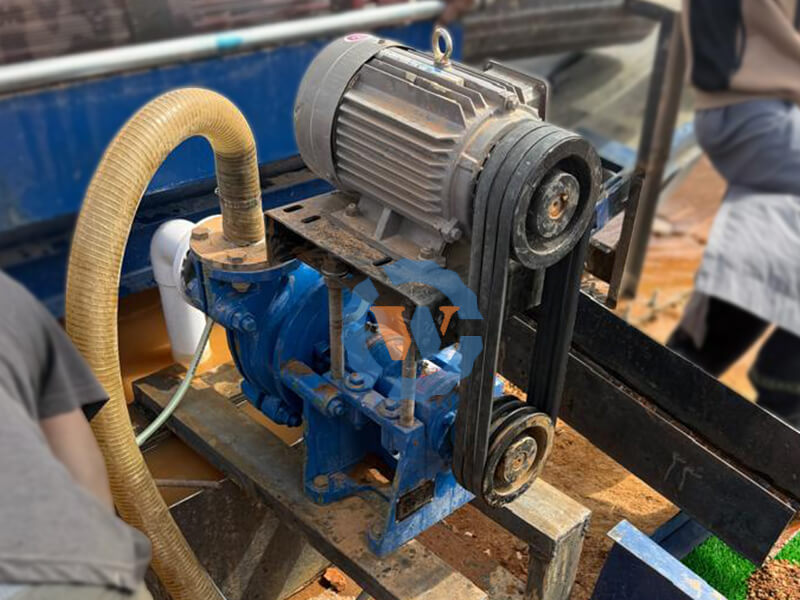
Water pumps play a critical role in conveying for mining and industrial applications. Targeted routine maintenance, preventive care, and intelligent monitoring solutions are essential strategies that enable mining processing plant operators to quickly pinpoint water pump problems. These solutions can reduce troubleshooting time and minimize production losses resulting from unplanned downtime.
If you need a special water pump that can adapt to high abrasion and high corrosion mineral processing conditions, or if you have a need for customized water pump models. Walker offers cost-effective pumps suitable for various ore processing scenarios, helping your production line operate efficiently and smoothly!


 English
  Español
  Português
  Русский
  Français