Mining Slurry Pump: Features & Selection Guide
In mining, how to break through the “wear dilemma” of high-concentration slurry transportation? Slurry pumps are used for slurry transportation. As the “heart equipment” of mining production, their performance directly determines the continuity of key links such as tailings treatment and backfill mining. From hard iron ore particles to corrosive acidic slurry, from high-lift long-distance transportation to high-concentration viscous media processing, traditional general-purpose pumps often cause frequent shutdowns due to rapid wear, excessive energy consumption or insufficient adaptability. This article will deeply analyze the core features of Walker mining slurry pumps, such as high wear-resistant design and intelligent monitoring, and provide a scientific selection methodology to help you from flow matching, media adaptability to cost.

Our mining slurry pumps efficiently handle high-wear, high-concentration slurry transport. We offer a six-step selection process, recognized by industry experts, that clarifies operating requirements, analyzes flow and head, matches material and model, selects pump type and mounting method, seals and transmission options, and evaluates supplier qualifications. This comprehensive selection guide helps you reduce mine operating costs and instantly obtain efficient pumping solutions!
Key Features of Mining Slurry Pump
1). Highly Wear-Resistant Design
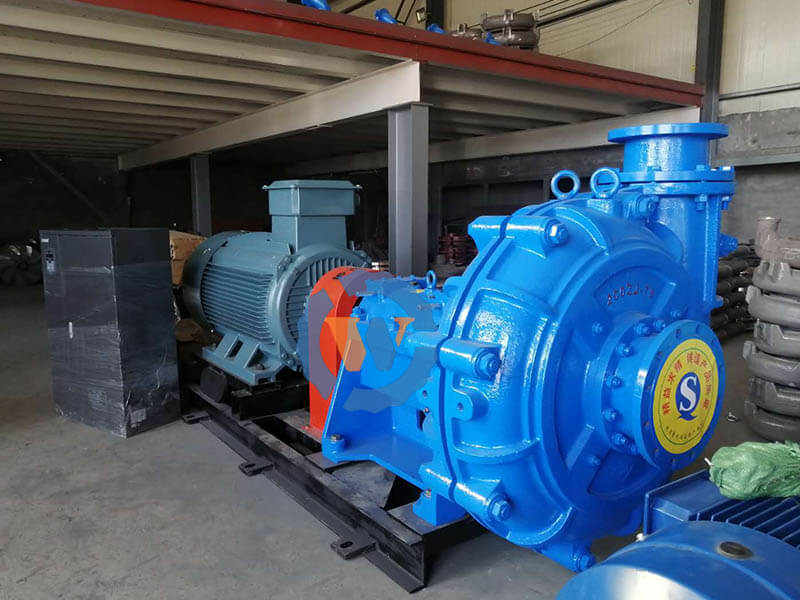
The core challenge of mining slurry pumps lies in conveying highly abrasive solid particles, making wear-resistant materials a key design consideration. High-chromium alloys (27% chromium content) are the leading choice due to their high hardness and toughness. They are particularly well-suited for handling highly abrasive media like iron ore slurries, offering a service life 3-5 times that of ordinary cast iron. For highly corrosive conditions (such as gold mine cyanide solutions), rubber linings made of natural rubber or polyurethane can elastically deform to cushion particle impact, reducing frictional losses while also resisting chemical corrosion.
2). High Flow & High Head
Mining operations often require the rapid transport of large volumes of highly concentrated slurry (solids content exceeding 60%). This requires mining slurry pumps with high throughput capacity, stable head performance, and the ability to withstand the harsh mining conditions. For example, in copper tailings transportation, high-flow pumps can replace multiple conventional pumps in series, reducing energy consumption and pipeline costs by 30%.
3). Corrosion Resistance
Acidic mine water or mineral processing chemicals (such as sulfuric acid and cyanide) can accelerate pump corrosion, making a dual-protection strategy crucial. The metal pump body is constructed of super-duplex stainless steel, which offers five times the chloride ion corrosion resistance of 304 stainless steel. Non-metallic components (such as liners) are constructed using ceramic composites or PP/PTFE coatings.
4). Safe & Reliable
If a sudden increase in slurry concentration causes motor overload (current exceeding 1.2 times the rated value), the pump will automatically shut down and issue an alarm to prevent motor burnout. The mining slurry pump can utilize standardized mechanical seals, simplifying inventory management. The pump cover is hinged to the pump body and can be tilted upward 90°, allowing for easy inspection of flow-through components and improving maintenance efficiency by 50%. This makes it ideal for rapid maintenance in continuous mine production scenarios.
How To Choose Mining Slurry Pump
1. Identify The Required Operating Conditions
Slurry particle size should be determined by sieve analysis. If the proportion of coarse particles exceeds 30%, a large-channel impeller should be used. Concentration should be determined using the volumetric method. For example, gold flotation tailings typically have a concentration of 25%-35%, necessitating a high-lift pump. Tailings treatment typically requires high lift and high flow rates, while backfill mining places greater emphasis on precise flow control.
2. Flow Rate and Range Analysis
Flow rate (m³/h) should be calculated based on process requirements. For high-concentration slurries, select 40%-80% of the mining slurry pump’s peak efficiency flow rate. For low-abrasive slurries, select 40%-100% (avoid exceeding 120%). When calculating head (H), consider both longitudinal losses (Darcy’s formula) and local losses (equivalent length method). Use variable frequency drive (VFD) when necessary to adapt to varying operating conditions.
3. Material and Model Matching
For highly abrasive slurries like iron ore (Mohs hardness 7-8), high-chromium alloy extends mining slurry pump life. For medium-to-low-abrasive media like bauxite (Mohs hardness 3-4), a composite rubber lining solution can reduce investment costs by 40%. For specialized applications, such as subsea mining, a combination of super-duplex stainless steel and silicon carbide coating is required. For fine-grained, low-concentration slurries like coal and phosphate rock, rubber-lined slurry pumps are more economical, and the elastic cushioning reduces noise.
4. Selecting Mining Slurry Pump Type & Installation Method
For low-abrasive slurries (concentrations <30%), use an L-type pump. For high-concentration, highly abrasive slurries, choose AH or KSH types. For high-lift applications, choose ZGB or KSHH types. For applications with large liquid level fluctuations or submerged applications, choose a vertical submersible pump. For submerged applications, use a submersible slurry pump. Installation methods: Horizontal above ground, vertical submerged, or fully submerged.
5. Determine The Sealing and Transmission Method
For normal operation, a packing seal is used. Shaft seal water is required. The water pressure is equal to the pump outlet pressure + 3.5 meters of head. Alternatively, an expeller seal can be used. This seal is suitable for reverse flow and requires a pipe pressure less than 10% of the pump outlet pressure. For leak-free operation, a mechanical seal is selected. Cooling water is required. Couplings (high efficiency) or V-belts (low cost) are preferred for transmission. Gear reducers or variable frequency drives are used for special conditions.
6. Evaluate The Operating Environment And Manufacturer Selection
Compare initial investment, operating energy consumption, maintenance costs, and expected lifespan to select the solution with the best overall economic benefits. Also consider extreme temperatures (which can affect seal lubrication), explosion-proof requirements, and space constraints. Select a manufacturer with wear-resistant components (such as ultra-wear-resistant linings with a high wear resistance index) and sufficient spare parts. Allow for equipment expansion and prioritize lightweight lining designs for easier maintenance.
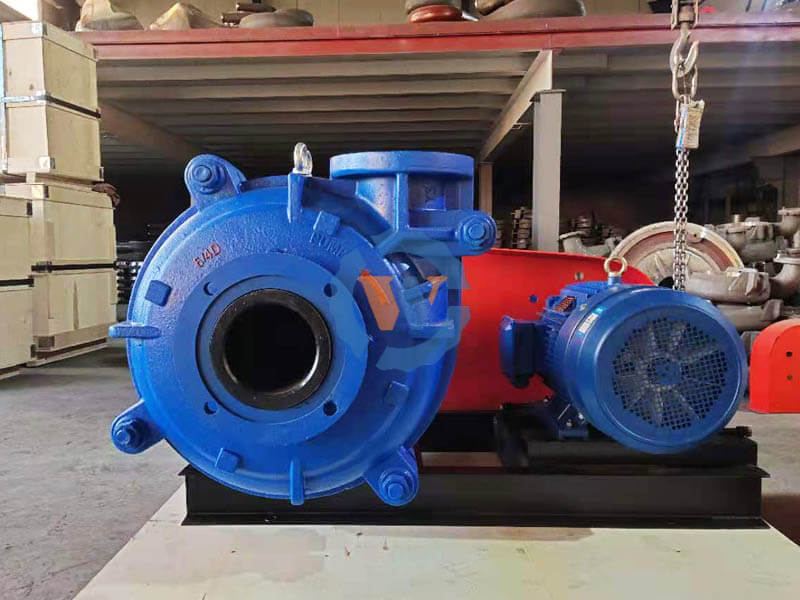
Choosing the right mining slurry pump directly impacts mine production efficiency and operating costs. By following these six key steps, you can scientifically determine the optimal pump model, ensuring wear- and corrosion-resistant performance, efficient operation, and stable operation. Proper model selection not only extends equipment life but also reduces energy consumption and maintenance costs, ensuring safe and reliable continuous production. For customized pumps, please contact us for one-on-one technical support.


 English
  Español
  Português
  Русский
  Français