Which Type Of Water Pump Is Best For Mining Projects?
In mining projects, water pumps are not merely drainage tools, but core equipment ensuring production efficiency, safety, and cost control. For example, reliable water pumps are essential for every critical stage, including underground drainage, slurry transportation to the concentrator, and tailings treatment. Choosing the wrong pump can lead to anything from low efficiency, slowing down the project and frequent malfunctions, increasing maintenance costs, to serious consequences such as safety accidents due to insufficient explosion-proof ratings or environmental pollution due to poor wear resistance causing slurry leaks. This article will analyze the key characteristics of mainstream mining water pumps, such as submersible pumps, centrifugal pumps, and slurry pumps to help you solve challenges such as high wear, strong corrosion, and high-pressure drainage, and then find the appropriate pump type based on your specific working conditions.
This article provides an in-depth analysis of three main types of water pumps: slurry pumps are suitable for slurry transportation and tailings treatment; submersible pumps are suitable for underground drainage and water pumping; and centrifugal pumps are suitable for transporting clean water or low-concentration slurries. It compares the performance differences of these three mining pump types and provides a scientific selection process to ensure mining projects are both efficient and compliant.
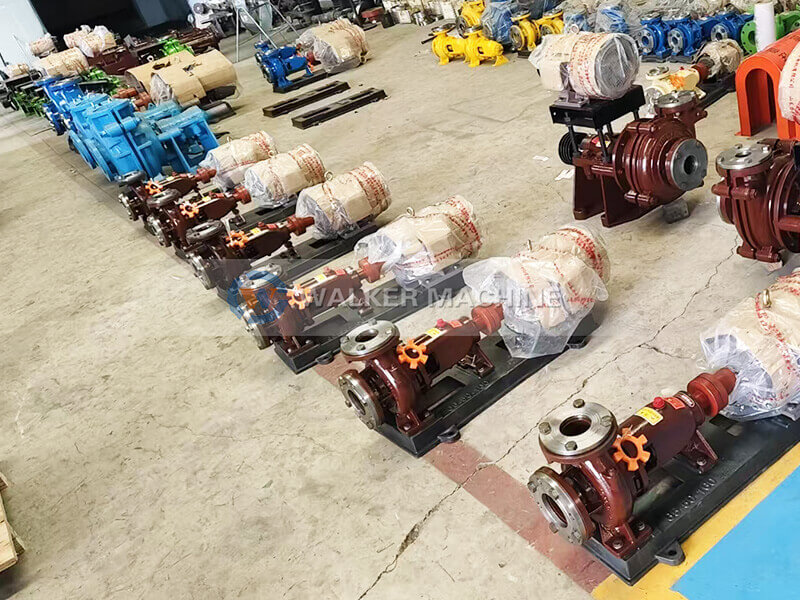
What are the core requirements for water pumps in mining projects?
Mining environments often face extreme challenges: highly corrosive water, mud containing large amounts of abrasive solid particles, high-pressure environments in deep wells, and the need for 24-hour uninterrupted operation.
(1) Media Adaptability
The media transported in mining scenarios are complex and varied. Slurries containing high concentrations of mud and sand, and sharp slag account for over 60%, and some areas also require the treatment of acidic mine water (pH 3-5) or wastewater containing heavy metal ions. This necessitates water pumps with wear-resistant flow components and special flow channel designs to prevent solid particle deposition and blockage. Prioritizing media adaptability is also a core requirement for ensuring production continuity.
(2) Environmental Tolerance
Explosive mixtures such as methane and coal dust exist underground in mines. Mining water pumps must meet explosion-proof standards to avoid explosions or other dangerous problems. Simultaneously, underground humidity often exceeds 90%, requiring motors with an IP68 waterproof and dustproof rating to prevent moisture intrusion and short circuits.
(3) Performance Indicators
For deep well drainage, high head is required, and multi-stage centrifugal pumps with pressure superposition are preferred. Tailings transportation requires large flow rates, making slurry pumps the optimal choice. Typically, mining production operates 24 hours a day. Pumps must also be durable enough for at least 20 hours of daily operation, with imported wear-resistant alloy bearings and a double-end-face mechanical seal system to prevent slurry leakage and subsequent shutdowns.
(4) Maintenance Costs
Mining projects are often located in remote mountainous areas, making it difficult for maintenance personnel and equipment to reach them. Pumps should ideally be designed with a modular structure for easy replacement and maintenance. Key wear parts should be compatible with industry-standard models to reduce the need for custom-made components. Furthermore, a remote monitoring system should be installed to monitor vibration, temperature, and other parameters in real time, providing early warnings of bearing wear failures and preventing additional losses from sudden shutdowns.
Types of Water Pumps Used in Mining
1. Slurry Pumps
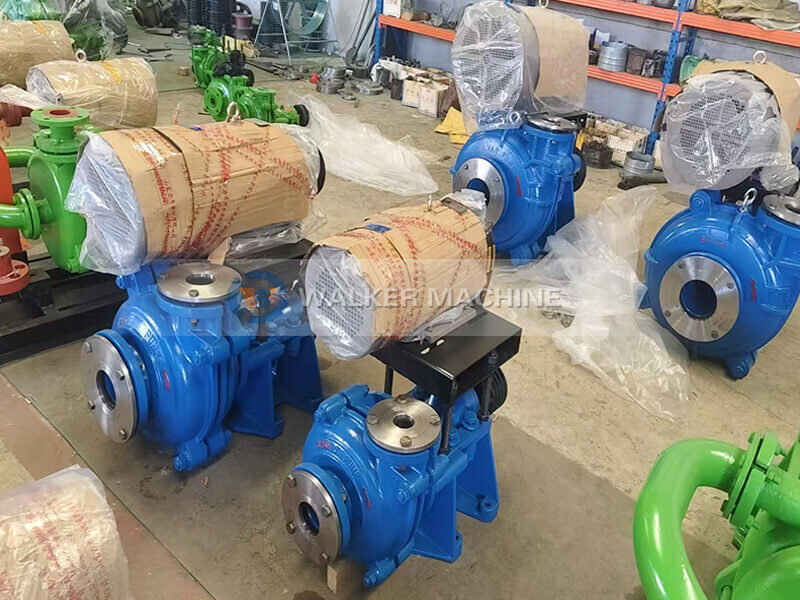
Slurry pumps are specifically designed for solid-liquid mixtures containing high concentrations of silt and sharp slag. Their exceptional media adaptability makes them the preferred choice for slurry transportation. Their wear-resistant and anti-clogging characteristics effectively reduce downtime and maintenance frequency caused by media abrasion, making them crucial equipment for ensuring continuous mining production.
Structural Features:
- The impeller is made of high-chromium alloy or ceramic composite material, resistant to long-term particle erosion.
- The pump body has a wide and smooth flow channel, reducing the risk of slag blockage.
- The sealing system uses a double-end mechanical seal to prevent slurry leakage.
2. Submersible Pumps
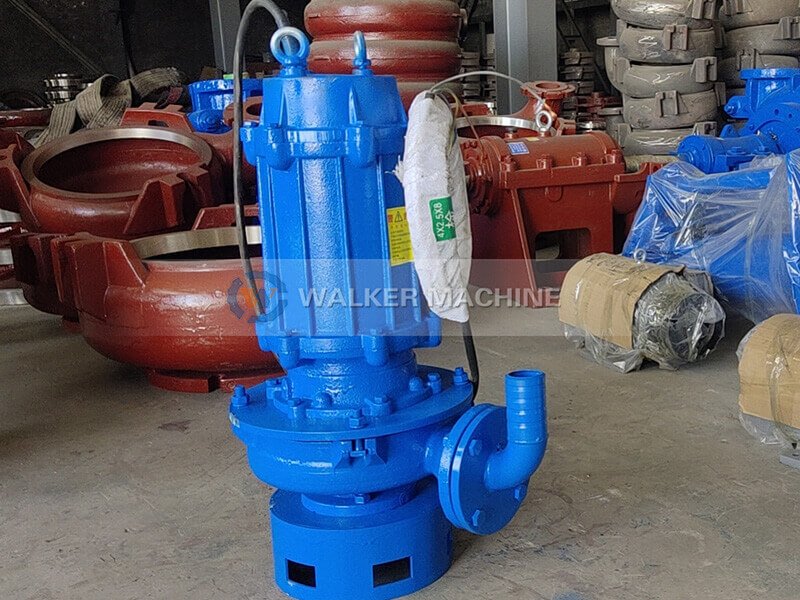
As the preferred equipment for deep well drainage, the most significant feature of submersible pumps is their ability to operate completely submerged in water, strictly meeting the requirements of special environments. Secondly, the protection rating should be no less than IP68 to ensure the motor is not corroded in humid and dusty environments.
Structural Characteristics:
- The impeller material is preferably wear-resistant cast iron or high-chromium alloy, easily handling the silt and sand particles contained in the well water.
- Its enclosed motor design achieves dual heat dissipation through an oil cooling system, and the casing is typically made of stainless steel or special cast iron to resist corrosion from acidic mine water.
- Walker’s compliant explosion-proof submersible pumps effectively prevent safety accidents caused by explosive gases such as methane and coal dust.
3. Centrifugal Pumps
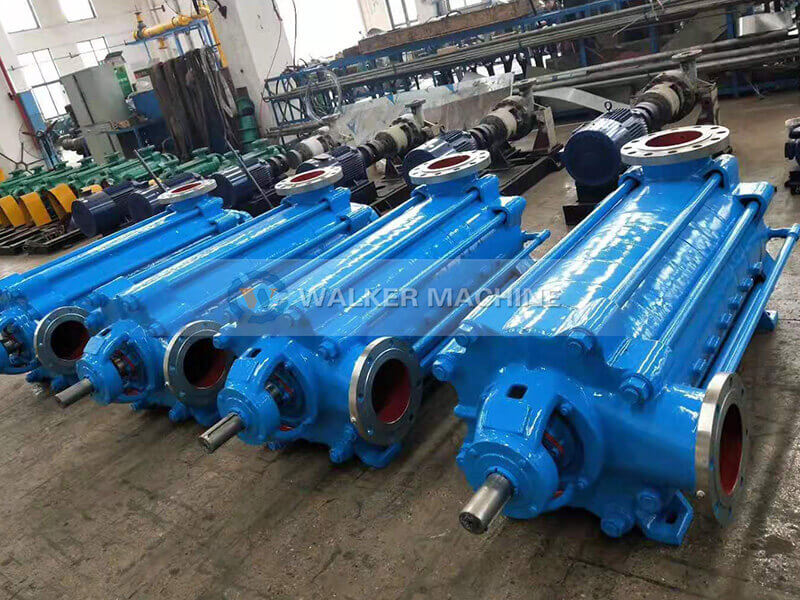
Centrifugal pumps are relatively inexpensive and widely used in process water circulation systems in mineral processing plants. However, due to their narrow flow channels, they are easily clogged by slag; ordinary metal impellers have poor wear resistance; and they lack an explosion-proof design. On the other hand, they are easy to maintain, mainly due to the quick-release design of the bearing housing, which allows for rapid replacement of the entire rotor, significantly reducing downtime losses. In mining projects, they are only suitable for conveying low-concentration clean water or slightly polluted water on the surface and should be avoided in core production processes.
Comparison of Commonly Used Water Pump Types
Water Pump Type | Applicable Scenarios | Advantages | Disadvantages |
Slurry Pump | Transportation of solid-containing slurry, tailings treatment | Wear-resistant, high lift | High energy consumption |
Submersible Pump | Underground drainage, accumulated water pumping | Small footprint, easy installation | Difficult to maintain |
Centrifugal Pump | Clean water/low-concentration slurry transportation | High efficiency, low cost | Easy to clog |
How to Choose the Most Suitable Water Pump for Mining?
1. Define Project Requirements
First, accurately determine the flow rate, head, and medium type. Flow rate should be calculated based on the project’s actual production capacity. Head should consider vertical lifting height, pipeline friction loss, and local losses. This step directly determines whether the pump is suitable for the scenario and is the foundation of the mining pump selection process.
2. Assess the Environment
It is recommended to create a site checklist covering 20 indicators such as ambient temperature, relative humidity, and tilt angle. On-site survey services can be requested if necessary.
3. Compare Cost-Effectiveness
While high-quality pumps may have a 30% higher initial purchase price, their overall annual cost can be reduced. Ordinary cast iron impeller slurry pumps have a 15% lower initial purchase price, but due to their poor wear resistance, maintenance costs are slightly higher. It is recommended to create a cost comparison table covering all expenditures such as energy consumption, spare parts, and labor, directly reflecting the impact on project profits.
Mining water pumps are crucial for ensuring safety and efficiency in mine production. Pump selection must focus on key factors such as precise flow-head matching, wear and corrosion resistance (e.g., high-chromium alloy materials), explosion-proof adaptability, energy efficiency, and low maintenance costs. Slurry pumps are suitable for conveying high-solids slurries; submersible pumps are essential for underground drainage; centrifugal pumps must be avoided in corrosive or high-solids environments. If you are looking for high-performance pump solutions for your mining project, or need customized equipment for specific operating conditions, please contact Walker‘s professional technical team for the optimal pump model!


 English
  Español
  Português
  Русский
  Français