Froth Pump Maintenance: Tips for Long-Lasting Use
Does your froth pump always “break down” at crucial moments? Froth pumps are core equipment for conveying aerated slurries in mining, metallurgy, and wastewater treatment. In mineral processing, they are responsible for efficiently transporting froth rich in target minerals, directly affecting mineral processing recovery rates. In wastewater treatment systems, they are the core power source for foam separation processes. Improper maintenance can not only cause a sharp drop in equipment efficiency of over 30%, but also potentially lead to unplanned downtime and even lose hundreds of thousands in recovery benefits. Now, follow this professional froth pump maintenance guide to prevent your froth pump from suffering a “short lifespan” curse!
Froth pump maintenance techniques can extend the life of pumps, mainly covering core aspects such as daily checklists, bearing seal maintenance, and solutions to common faults. It also includes selecting corrosion-resistant materials and seasonal maintenance adjustments to avoid selection pitfalls.
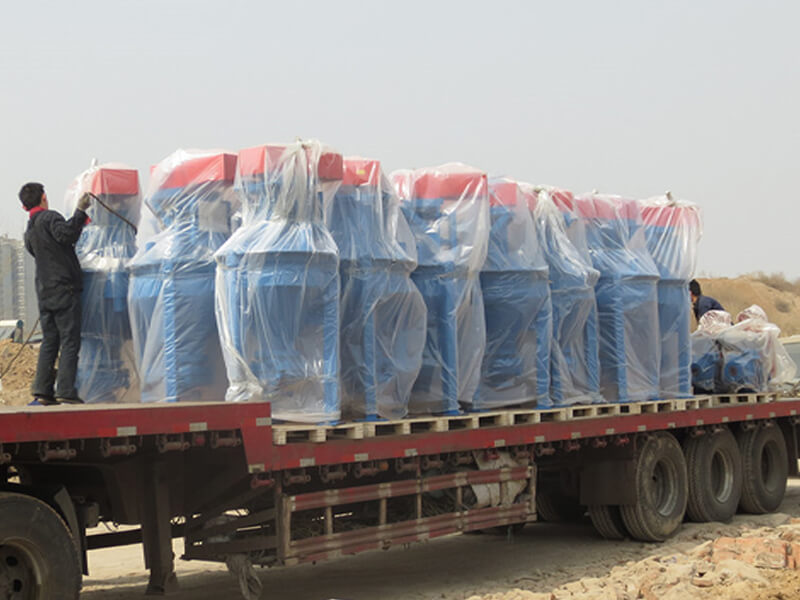
Basic knowledge of froth pumps
1. What is a froth pump?
A froth pump is a special centrifugal pump designed specifically for conveying foam media containing a large amount of gas, unlike ordinary pumps, which only handle gas-liquid mixing. Its unique feature is its ability to efficiently handle two-phase flow media—solid particles + air—that traditional pumps struggle with. It is particularly suitable for flotation processes in mines such as gold, copper, lead, and zinc, where the froth pump precisely delivers the mineral-enriched foam to the refining stage. It can also be used for conveying froth materials in industries such as wastewater treatment, chemicals, and food processing.
Its working principle is based on centrifugal force: a motor drives an impeller to rotate at high speed, drawing the slurry into the pump chamber. The foam and solid particles are thoroughly mixed under the shearing action of the impeller. Finally, it is discharged under high pressure through the outlet.
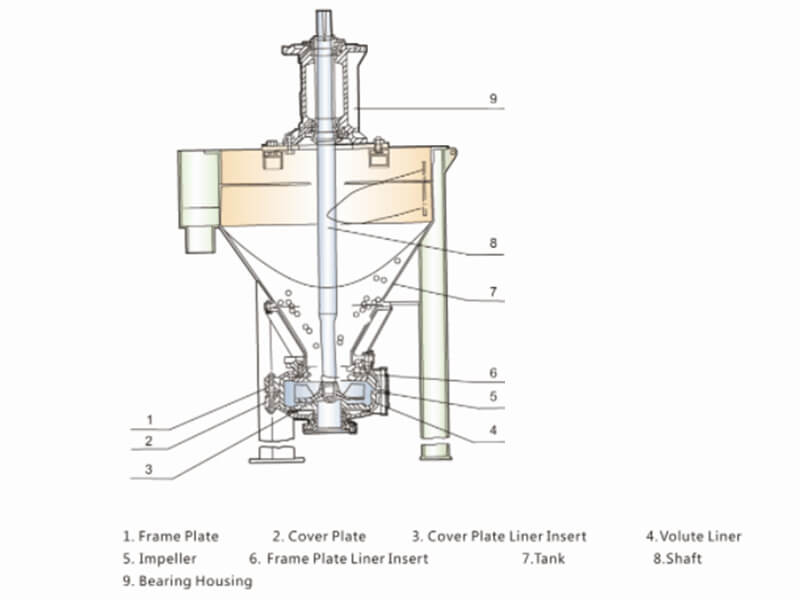
2. Core Components Of A Froth Pump
- Impeller: Utilizing backward-curved blades and a wide flow channel design, it generates sufficient head while reducing foam shear breakage.
- Pump Body: Typically lined with wear-resistant materials (such as rubber or polyurethane) to protect the metal casing from slurry erosion. Some models feature replaceable wear plates to extend the pump’s lifespan.
- Sealing System: Mechanical seals (requiring flushing water) or packing seals (suitable for high-risk media) are the mainstream choices. Special flushing structures prevent solid particles from the foam from entering the sealing surface, extending seal life.
Froth Pump Maintenance Rules
1. Daily Inspection
First, monitor the foam tank level and foam concentration to ensure the level is within the optimal operating range at the pump inlet. If the foam concentration is too high, adjust the reagent ratio promptly to avoid pump overload. Use a portable vibrator to measure the pump vibration value. If it exceeds 4.5 mm/s, immediately check the impeller balance or bearing wear. The standard for mechanical seal leakage is ≤5 ml/h. If slurry crystallization is found at the shaft seal (common in acidic media in mines), it indicates seal failure, and the seal must be replaced immediately.
2. Weekly Tasks
Weekly froth pump maintenance typically focuses on cleaning the lubrication system and fluid channels. Lubrication cycles follow equipment usage standards or routine operating conditions. After cleaning the oil chamber, add new oil to the oil level mark, while checking for emulsification or impurities. The best grease for the froth pump bearings should ideally balance high-temperature water resistance and extreme pressure performance. For cleaning inlet and outlet pipes, first close the valves, disassemble the pipe flanges, and use a high-pressure water gun to thoroughly remove layered deposits adhering to the pipe walls, then check for pipe wear. This is primarily to ensure unobstructed fluid flow and prevent excessive pump load due to pipe blockage.
3. Monthly Deep Maintenance
Monthly deep froth pump maintenance mainly involves comprehensive inspection and protection of core components. The degree of impeller wear is assessed by measuring the clearance between the impeller outer diameter and the pump body. When the clearance exceeds twice the design value, welding repair or replacement of the impeller is necessary. An endoscope is used to inspect the inner wall of the flow channel, especially areas prone to erosion. If localized corrosion is found, a water-based epoxy protective coating is sprayed onto metal surfaces, and a silicone-based anti-aging agent is applied to rubber parts.
Common Fault Diagnosis and Repair
(1) Impeller Wear
When the blade thickness wear exceeds 15% of the original size, pump efficiency usually decreases by 20%-30%.
Solution: Use stainless steel repair welding rods for overlay welding. After repair, a dynamic balance test needs to be performed again.
(2) Pressure Drop
Common faults during froth pump maintenance are mainly caused by impeller wear, leading to insufficient head and pipe blockage, causing flow restriction.
Solution: First, check the outlet pressure gauge value. If the pressure fluctuation is large, disassemble and inspect the impeller, measure the degree of blade wear, and replace it if the wear exceeds 1/3. If the pressure is stable but low, check the inlet and outlet pipes, and clean the filter and the slurry scale inside the pipes.
(3) Abnormal Vibration
Mostly caused by bearing damage or impeller imbalance.
Solution: Emergency on-site repair can be achieved by adjusting the impeller balance block and adding grease. Long-term solutions require replacing the damaged bearing.
(4) Seal Failure
Usually caused by wear or impurity blockage, it often manifests as end face leakage.
Solution: For temporary repairs, the packing gland can be tightened appropriately, and the mechanical seal can be sealed with emergency sealant. Preventative replacement requires selecting the appropriate sealing material based on the operating conditions; in mining scenarios, silicon carbide face mechanical seals are preferred to prevent sudden leaks in advance.
Tips for Extending Froth Pump Lifespan
To maximize the lifespan of a froth pump, a combination of material optimization and seasonal maintenance strategies is necessary. For corrosive media, prioritize froth pumps made of corrosion-resistant materials such as high-chromium cast iron, polyurethane liners, or ceramics. If used in cold regions, winter protection measures must be taken in advance. Preventing media solidification and equipment freezing damage through pump body insulation, shutdown drainage, and replacement of low-temperature lubricating oil ensures stable flow rates during winter.
Froth pumps are core equipment in mining flotation and chemical conveying, and their operating efficiency and lifespan directly affect production benefits. Different operating conditions place varying requirements on froth pumps, making proper selection, maintenance, and optimization crucial. If you require a customized froth pump solution for a specific material or environment, please feel free to contact Walker Pumps‘ expert team for professional support and personalized advice!


 English
  Español
  Português
  Русский
  Français