Slurry Pump Applications: Where Are They Used?
When faced with mountains of slag slurry or viscous industrial waste, have you ever wondered how they are quickly transported and processed? The answer is the slurry pump. Seemingly ordinary, it easily handles the challenges of corrosive liquids, abrasive particles, and even high-temperature waste. However, besides its most common applications in mining, it also maintains stable operation in extreme environments such as chemical plants, wastewater treatment, and dredging. This article outlines seven core areas of slurry pump applications and their corresponding operating requirements, helping you quickly find the most suitable slurry pump product and effectively reduce equipment maintenance costs.
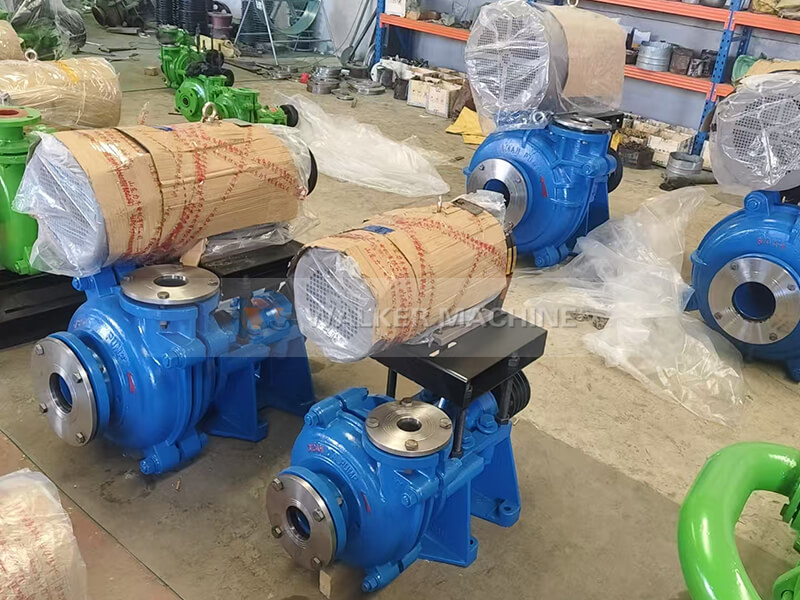
Slurry pumps, as core equipment for industrial fluid transportation, are widely used in mining, coal, metallurgy, power, dredging, chemical, building materials, and municipal engineering, playing an irreplaceable role in transportation.
The Core Value of Slurry Pumps
Applicable Operating Conditions
When the medium you need to transport contains more than 10% solids, sharp or hard particles, or is corrosive to acids or alkalis, this falls within the core suitable operating conditions for slurry pumps. These conditions are common in scenarios such as tailings transportation in mines, coal slurry transfer in coal washing plants, river dredging, and chemical material transportation. Under these conditions, ordinary pumps may wear out and become unusable within weeks. Slurry pumps, adapted to high solid content, highly abrasive, or highly corrosive environments, can have a lifespan 3-5 times longer than ordinary pumps, with lower overall maintenance costs.
Core Structure:
The key to the slurry pump’s ability to conquer extreme operating conditions lies in its unique structural design. Unlike ordinary water pumps, its flow-through components (such as impellers and pump casings) are made of wear-resistant materials such as high-chromium alloys, rubber linings, or silicon carbide ceramics, easily resisting the continuous impact of hard particles.
Addressing the challenges of sedimentation and clogging in high-concentration slurries, slurry pumps employ a large flow channel design and an optimized impeller structure. This not only ensures the smooth flow of high-solids media such as slurry and sludge, but also reduces the risk of cavitation. Furthermore, mechanical seals or auxiliary impeller seals effectively prevent the leakage of corrosive liquids, ensuring long-term stable operation.
7 Core Applications of Slurry Pumps
1. Mining Industry
Slurry pump applications account for over 35% of total sales in mining, making mining the largest user of pumps. Applications include the transfer of slurry in gold, copper, and iron ore beneficiation plants, and the discharge of high-concentration tailings from tailings ponds. These slurries typically contain over 20% hard ore particles with a Mohs hardness of 5-7, and the wear-resistant alloy impeller of the slurry pump can withstand the abrasion from sharp solid particles. It is recommended to prioritize double-shell structures with silicon carbide ceramic flow components when selecting a pump, as this improves wear resistance by more than 3 times.
2. Coal Industry
Slurry pumps in the coal industry are mainly used in coal washing and grading processes in coal washing plants, coal slurry in coal slime dewatering processes, and the transportation of high-concentration gangue slurry in gangue landfills. Typically, the transported medium contains a large number of fine coal gangue particles, which are highly abrasive and easily adhere to and clog the flow channels. However, slurry pumps can be equipped with large-channel impellers to prevent large particles from getting stuck.
3. Metallurgical Industry
Slurry pumps in the metallurgical industry primarily serve the transfer of slurry from blast furnace slag after water quenching in steel plants, as well as the transportation of metal ore slurry and acidic smelting waste in the smelting processes of non-ferrous metals such as copper and aluminum. The temperature of the transported medium in these applications is generally above 80℃, and some are highly corrosive acids. Therefore, when selecting a slurry pump, it is crucial to focus on high-temperature-resistant and corrosion-resistant materials, coupled with a zero-leakage mechanical sealing structure to avoid safety risks caused by media spillage.
4. Dredging Projects
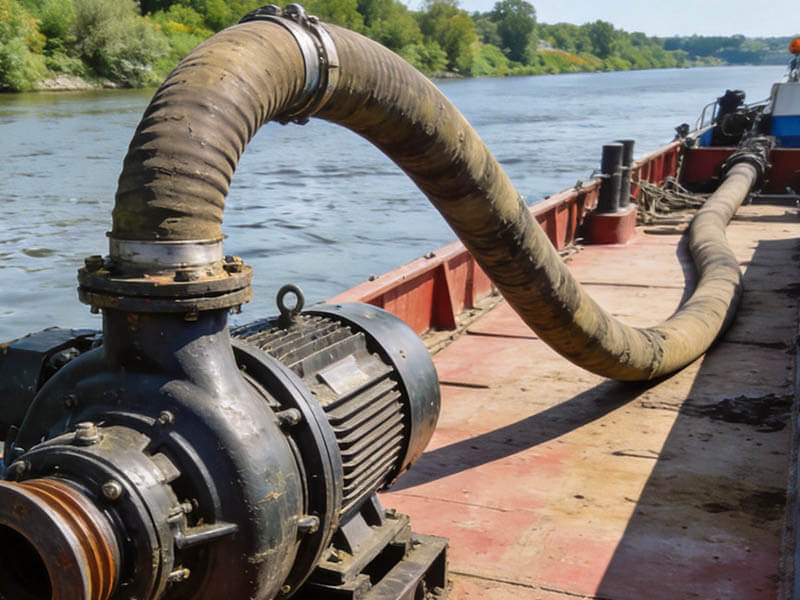
Generally, the slurry pump applications in dredging projects directly affect the overall construction efficiency of the project. They are mainly used in municipal river dredging, port and waterway dredging, and land reclamation. This type of slurry often contains large-particle impurities such as stones and construction waste with a diameter of over 10cm, and needs to be transported over long distances to high-lift landfill sites. Slurry pumps can be designed to meet the requirements of high flow rates, high lift, and wider flow channels. In addition, slurry pumps, which are used for selecting sand from seawater and dredging sand from riverbeds, can also be called sand pumps or mud pumps.
5. Building Materials Industry
In the building materials industry, slurry pumps are used in applications such as glaze transportation in ceramic production, raw material slurry transfer in cement production, and silica sand raw material slurry transportation in glass manufacturing. A key characteristic of these slurry pump applications is the requirement to maintain the integrity of the material particles during transport. Therefore, a dedicated slurry pump design is necessary to ensure efficient transport while maximizing product quality.
6. Municipal Engineering
In municipal engineering, slurry pumps are primarily used for transferring concentrated sludge in the dewatering process of urban wastewater treatment plants and for dredging urban underground pipe networks. These media have low water content, high viscosity, and contain impurities such as household waste and fine bricks. Suitable submersible slurry pumps can operate directly in sludge tanks, offering strong anti-clogging capabilities and significantly improving the efficiency of municipal dredging and sludge treatment.
7. Chemical Industry
Slurry pumps in the chemical industry are mainly used for transporting phosphate rock slurry in phosphate fertilizer production, transferring crystalline salt materials in the salt chemical industry, and transporting various chemical slurries with strong acid and alkali corrosiveness. These media not only have the abrasiveness of solid particles but are also highly corrosive. Therefore, special considerations are needed in material selection and structural design when selecting pumps for chemical applications.
The field of slurry pump applications is the most complex and diverse, covering seven core industrial scenarios, including mining, coal, metallurgy, and dredging. However, different operating conditions place vastly different demands on the wear resistance, corrosion resistance, flow rate, and head of the equipment. Selecting the right model can directly reduce operation and maintenance costs. Whether it’s transporting highly abrasive mineral slurries, handling highly corrosive chemical media, or transporting fine building materials, the slurry pump selection requires comprehensive consideration of media properties (particle size, corrosivity, temperature, etc.), flow rate and head requirements, and operating environment conditions.


 English
  Español
  Português
  Русский
  Français