Slurry Pump Seal Types: Which One Fits Your Abrasive Application?
Do you know which core component of a slurry pump is most prone to failure under highly abrasive operating conditions? The answer is, surprisingly, the unassuming sealing system. Typically, 70% of all unplanned slurry pump downtime stems from seal failure. For instance, the continuous intrusion of high-concentration, high-hardness solid particles into the sealing faces can—at best—lead to media leakage and material loss; at worst, it triggers production interruptions, safety and compliance risks, and increased operational and maintenance costs for the slurry pump. The crux of the matter lies here: Do you truly understand the limits of how different sealing technologies can withstand abrasive media? This article will take you straight to the heart of the selection logic behind the 4 major mainstream slurry pump seal types, helping you steer clear of common pitfalls in the selection process.
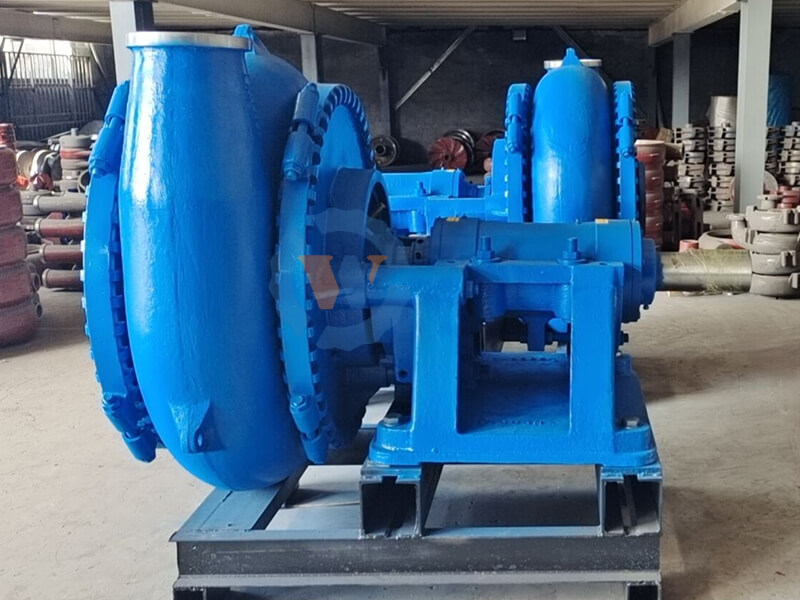
Currently, the predominant types of slurry pump seals fall into four major categories: packing seals, mechanical seals, expeller seals, and combination seals. Users in sectors such as mining and chemical engineering can directly select the optimal configuration based on parameters such as media concentration, particle size, pressure, and temperature.
Why Do Slurry Pumps Require Sealing?
Abrasive Media Destruction of the Seal
The impact of solid particles accelerates the wear of the sealing surface; the larger the particle size, the stronger the destructive force. The larger the particle size, the greater the destructive force. Furthermore, high particle concentrations can become lodged in the sealing gap, creating a grinding effect. Additionally, acidic or alkaline media and high-temperature environments can trigger a cascade of issues, including corrosion and deformation of sealing materials.
The Cost of Seal Failure
Seal failure primarily leads to media leakage, polluting the on-site environment and even causing environmental problems. Moreover, leaking slurry can infiltrate the bearings, causing lubrication failure and subsequently leading to pump malfunction and downtime. Even more alarming is the potential for safety accidents—such as worker burns caused by splashing material or the release of toxic substances—which not only drive up maintenance costs but also pose significant safety hazards.
Slurry pumps transport media such as mineral particles and coal slime, which are highly abrasive. Standard sealing mechanisms cannot withstand the continuous scouring action of these particles and therefore require specialized adaptation. Consequently, a reliable sealing system for slurry pumps serves as the primary line of defense in ensuring the long-term, stable operation of the equipment.
What are the types of seals for slurry pumps?
1. Packing Seal
As the most traditional sealing method, the packing seal relies on compressed soft packing materials (such as graphite or PTFE) filling the clearance between the shaft and the sleeve to prevent leakage.
Advantages: Simple structure, easy installation and replacement, extremely low initial procurement costs, and rapid commissioning without the need for complex adjustments.
Disadvantages: During operation, direct friction occurs between the packing and the shaft sleeve, leading to rapid wear; consequently, leakage is prone to occur during prolonged operation. It is not suitable for applications requiring high precision or subject to strict environmental regulations.
Applicable Scenarios: The packing seal design for slurry pumps is suitable for intermittent operating conditions involving low pressure and low abrasiveness. It is particularly well-suited for temporary slurry transport in small-scale mines or for production lines involving seasonal operations.
2. Expeller Seal
The expeller seal primarily utilizes an auxiliary impeller within the pump casing to generate a reverse pressure, thereby preventing media leakage. It represents a completely non-contact, zero-wear dynamic sealing technology.
Advantages: No frictional losses during operation; requires no external lubrication; features virtually no standard wear parts.
Disadvantages: Relies on pump speed to generate sealing pressure; offers no sealing effect at low speeds or during shutdown; unsuitable for high-pressure pumping applications.
Applicable Scenarios: The expeller seal solution for slurry pumps is particularly well-suited for continuous-operation scenarios involving high solid-particle concentrations where high pressure is not required—such as tailings discharge and sand/gravel slurry transport.
3. Mechanical Seal
The mechanical seal is currently the most widely used type of seal for slurry pumps. It functions primarily through the precise mating of a rotating ring and a stationary ring to form a sealing interface; these seals are broadly categorized into contact and non-contact types.
Advantages: Minimal leakage; high operational stability; capable of meeting the demands of rigorous, continuous-operation environments; offers the flexibility to choose between contact and non-contact configurations.
Disadvantages: The initial procurement cost of a mechanical seal is significantly higher than that of a packing seal. Its structure is complex, requiring high precision during installation, and hard particles can easily scratch the sealing faces, leading to seal failure.
Applicable Scenarios: Mechanical seals are suitable for continuous operation under medium-to-high pressure conditions and represent the mainstream choice in slurry pump sealing technology. They are particularly well-suited for highly abrasive, continuous production environments such as mineral processing and chemical manufacturing.
4. Combination Seal
Combination seals are designed by integrating various factors, such as specific slurry characteristics and operating conditions. Examples of such combinations include “Expeller Seal + Mechanical Seal” or “Mechanical Seal + Expeller Seal.”
Advantages: Can be specifically tailored to address unique operating conditions; provides multi-level protection; offers significantly higher sealing reliability compared to single-seal configurations.
Disadvantages: The overall structure is more complex, requires custom design and matching based on specific operating conditions, and involves higher initial investment costs.
Applicable Scenarios: Slurry pumps equipped with combination seals are suitable for extremely complex operating environments characterized by significant pressure fluctuations and the simultaneous presence of strong abrasion and corrosion. They are particularly utilized in sectors—such as mining and chemical manufacturing—where safety and environmental protection requirements are exceptionally stringent.
How to Select the Right Slurry Pump Seal Type?
Seal Selection Guide for Various Applications
1. Mineral Processing
In mineral processing operations—particularly when conveying high-concentration slurries containing large particles—the fluid is highly abrasive, and continuous operation is often required. Priority should be given to a combination seal system featuring an expeller impeller paired with packing; this configuration effectively prevents the intrusion of large particles.
2. Coal & Power Generation
For coal ash slurries and coal fines—which consist of fine, hard particles—non-contact mechanical seals or packing seals equipped with a flushing system offer a more economical and practical solution. If the slurry contains a significant amount of coarse coal slag, a combination approach utilizing an expeller impeller paired with a mechanical seal may be considered.
3. Chemical & Metallurgical Industries
In chemical and metallurgical settings, slurries frequently exhibit both abrasive and corrosive properties, and some applications involve high temperatures. It is recommended to prioritize non-contact mechanical seals constructed from corrosion-resistant materials, or to utilize slurry pumps featuring a combination seal design, in order to protect critical components against wear and degradation.
4. Dredging & Construction Materials
Slurries containing sand and gravel are characterized by large, sharp-edged particles that exert strong impact forces. Consequently, the expeller impeller seal is the preferred choice for these applications; its non-contact structure ensures low maintenance costs and offers excellent adaptability to such demanding conditions.
Slurry pump seal types include: packing seals, mechanical seals, expeller seals, and combination seals. When selecting a sealing solution, there is no single “absolute best” option; There is no absolutely optimal solution for selection, only the solution that best suits the working conditions. To effectively minimize the risk of failure and reduce maintenance costs, the appropriate sealing type must be selected based on a careful assessment of the fluid properties, operating parameters, and specific application requirements. We invite you to contact us for a personalized, one-on-one pump solution; we will identify and match you with highly reliable products tailored to your needs, thereby ensuring the stable and smooth operation of your production processes.


 English
  Español
  Português
  Русский
  Français