How to Choose A Hydrocyclone Feed Pump? Guide To Selection and Maintenance
Did you know that the hydrocyclone feed pump is the “power core” of an industrial separation system? In industrial fields such as mineral processing and wastewater treatment, it plays a crucial role in conveying media and maintaining stable hydrocyclone pressure. The choice of pump directly determines the stability and economic efficiency of the entire production line. A well-matched pump not only ensures smooth material transport but also significantly reduces energy consumption and maintenance costs. Conversely, incorrect selection can lead to frequent malfunctions, premature wear, and even affect the quality of the final product. This article will provide a one-stop solution to selection and maintenance problems, offering practical guidelines to help you avoid pitfalls, optimize operation, and truly make the hydrocyclone feed pump a reliable assistant for cost reduction and efficiency improvement.
The hydrocyclone feed pump is used for conveying slurry and wastewater. When selecting a pump, factors such as flow rate, head, wear-resistant materials (e.g., high-chromium alloy or rubber lining), and pump type (centrifugal pump, screw pump, or slurry pump) must be considered. Daily vibration/temperature checks, regular seal lubrication, and maintenance techniques will help you choose the right pump, reduce operating costs, extend equipment life, and improve the efficiency of your separation system.
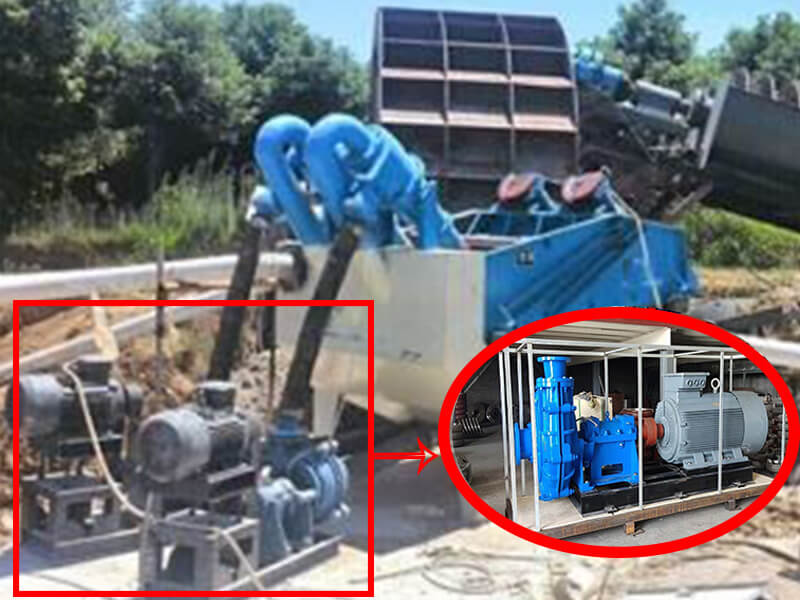
What is a hydrocyclone feed pump?
A hydrocyclone feed pump is a feeding device specifically designed for hydrocyclone systems. Its core function is to deliver the medium to be separated (such as mineral slurry, wastewater, and chemical slurry) into the hydrocyclone at a stable pressure and flow rate, providing crucial power support for the formation of the internal swirling flow field.
These pumps typically employ a centrifugal design, relying on the centrifugal force generated by the high-speed rotation of the impeller to propel the material flow. They feature stable delivery pressure and adjustable flow rate. To ensure wear resistance, key components are usually made of high-chromium alloys or rubber linings. Specially designed volute structures and impeller configurations effectively reduce turbulence and vibration, making them ideal for handling corrosive slurries containing abrasive particles. Their core advantage lies in their ability to stably deliver high-concentration slurries containing solid particles under high pressure. They are also typically equipped with frequency converters, allowing for precise adjustment of flow rate and pressure according to the hydrocyclone’s operating requirements.
Types of Hydrocyclone Feed Pumps
- Centrifugal hydrocyclone feed pumps offer high flow rates and low purchase costs. Their impeller design is adapted to low-abrasive media, making them suitable for solid-liquid separation in wastewater treatment plants or for conveying low-concentration mineral slurries. However, they lack durability with highly abrasive, coarse-particle media.
- Screw feed pumps provide stable pressure and strong corrosion resistance. They convey media through screw engagement and can handle high-concentration mineral slurries and viscous chemical slurries. However, maintenance costs are relatively high.
- Slurry pumps, as a specialized type, employ corrosion-resistant flow components, offer high head, and can withstand the scouring of coarse-particle slurries. They are a core choice in mineral processing, but energy consumption is relatively high.
Hydrocyclone feed pumps are mainly divided into three categories: centrifugal pumps, screw pumps, and slurry pumps, each with its own characteristics and suitability for different industrial scenarios. The appropriate type must be selected based on the abrasiveness and concentration of the media, as well as the system pressure requirements, to balance operating efficiency and long-term costs.
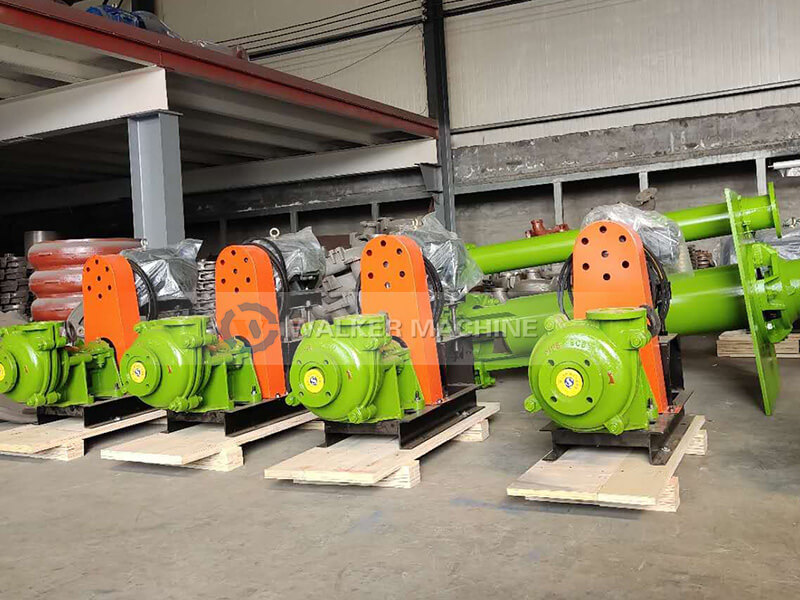
Selection Guide for Hydrocyclone Feed Pump
1. Medium Characteristics
A detailed analysis of the concentration of the medium to be transported is required: For example, does the slurry concentration exceed 30%? Abrasiveness: Does it contain coarse particles or high-hardness impurities? Corrosivity: Is it an acidic/alkaline slurry?
If the medium is highly abrasive, wear-resistant alloy flow parts should be selected; if it is highly corrosive, stainless steel is preferred. For highly abrasive slurries, high-chromium alloy (Cr26) or rubber-lined pumps are recommended; for corrosive media, 316L stainless steel or duplex stainless steel is suitable; ceramic linings can be considered for extreme conditions. The sealing method is also crucial; mechanical seals are suitable for clean media, while packing seals are more suitable for slurries containing solid particles.
2. Flow Rate & Head Requirements
The flow rate calculation for the hydrocyclone feed pump must consider the hydrocyclone separation efficiency and system pressure loss. Generally, the flow rate should be determined based on the required throughput and the head should be determined in conjunction with pipeline resistance. Insufficient flow rate will affect the hydrocyclone separation effect, while excessive flow rate may lead to increased energy consumption. It is recommended to ensure pumping stability by checking the effective net positive suction head (NPSH), while considering a 10%-15% design margin to cope with fluctuations in operating conditions.
3. Flow Rate Stability
Statistically analyze the average and peak flow rate fluctuation range of the medium to select a pump type with suitable flow regulation. If the fluctuation is large, it is best to select a pump type with variable frequency drive (VFD) function to avoid excessive flow leading to wasted energy or insufficient flow leading to separation failure.
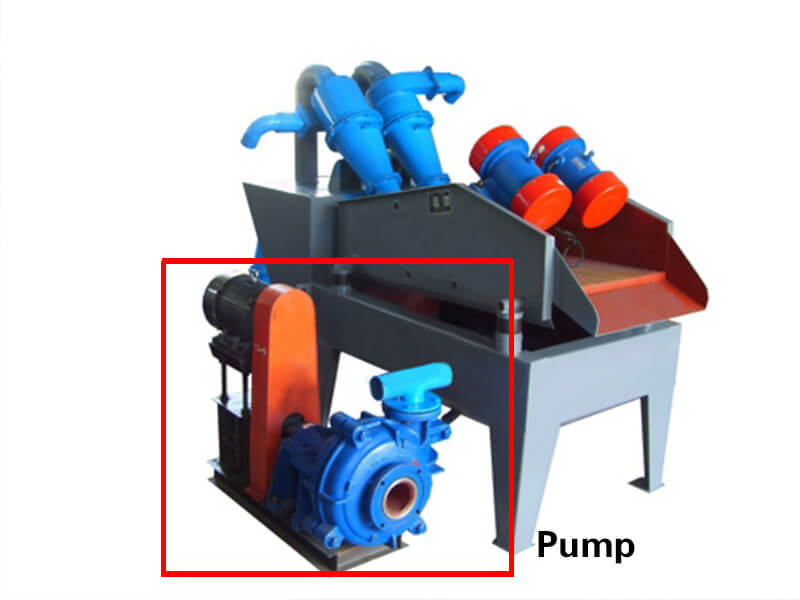
Comparison of common pump types: Which one is more suitable?
| Pump Type | Applicable Scenarios | Core Advantages | Notes |
|---|---|---|---|
| Centrifugal Pump | Low-concentration slurry (≤25%), activated sludge in municipal wastewater treatment | Large flow rate, low purchase cost | Avoid conveying highly abrasive coarse particles (>0.5mm) |
| Screw Pump | High-concentration viscous medium (≥40%), chemical oily sludge | Stable pressure without pulsation, wear and corrosion resistant | Regular replacement of screw seals (every 3 months) |
| Slurry Pump | Coarse-grained slurry in metal mines, metallurgical slag transportation | Excellent wear resistance, high head | Regular inspection of wear condition of flow-through parts (monthly) |
Hydrocyclone Feed Pump Maintenance: Key Steps to Extend Lifespan
(1). Daily Maintenance
Three core indicators need to be checked daily: Observe the vibration value using a vibration meter; ≤4.5mm/s is normal, exceeding this requires shutdown and investigation. Monitor bearing temperature using an infrared thermometer; normal should be below 70℃; exceeding 85℃ requires immediate shutdown and inspection. Address seal leakage issues; mechanical seal dripping ≤5 drops/minute is normal, packing seals should be continuously dripping; exceeding this requires action. Weekly preventative maintenance focuses on regular lubrication, pipeline support checks, and foundation bolt tightening. Monthly checks should also be performed on the mechanical seal end face for scratches and on the packing for aging and cracking; wear parts should be replaced promptly.
(2). Recommendations for Regular Replacement of Wear Parts
The impeller is the most critical wear part. In slurry applications, the impeller should be replaced every 6-12 months, and the sealing ring every 12 months. Original parts should be prioritized, and the material should meet wear resistance standards. Non-original parts may have dimensional deviations or substandard materials. It is worth noting that the actual lifespan of wear parts is closely related to the characteristics of the medium. For example, when processing high-hardness materials such as silica sand, the aforementioned cycle should be shortened by 30%. Special care should be taken to avoid prolonged overload when replacing parts. A trial run monitoring should be conducted within 4 hours after replacement. It is recommended to stock key wear parts when purchasing hydrocyclone feed pumps to ensure that equipment downtime does not exceed 24 hours.
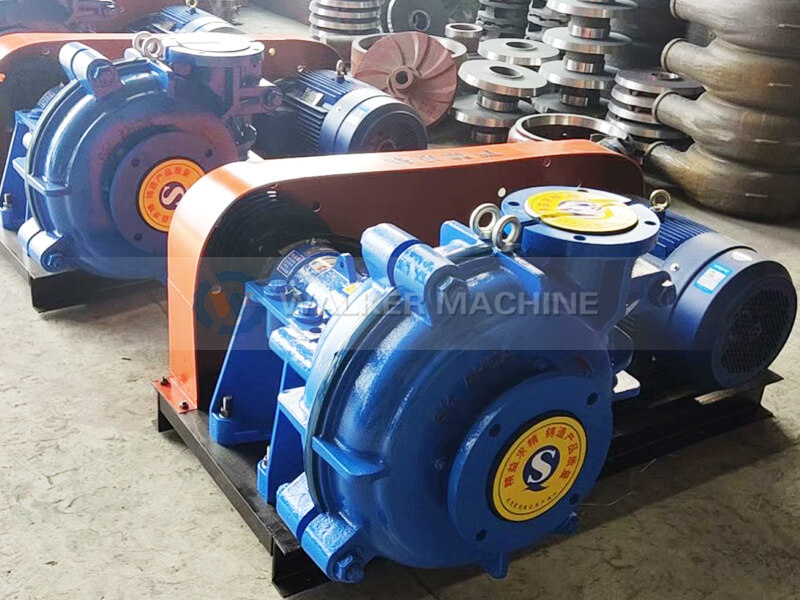
Hydrocyclone feed pumps are the driving force behind efficient slurry separation in the mineral processing industry. In addition, pumps are crucial for stable solid-liquid separation in wastewater treatment plants and are essential for maintaining pressure balance in chemical production lines. Whether you are a first-time buyer or need to optimize existing equipment, these expert suggestions can help you avoid common pitfalls, make more informed investment decisions, ensure long-term stable operation of your production line, and achieve optimal economic benefits. Customized pump selection is supported; contact Walker now for your exclusive solution!


 English
  Español
  Português
  Русский
  Français