What Types Of Slurries Can Dredge Pumps Handle?
What exactly is the slurry in your dredging project? While this question may seem simple, it is the decisive factor in selecting the right dredge pump. In contexts like mining, river dredging, or industrial wastewater treatment, “slurry” is far more complex than just “dirty water.” Variations in solid concentration, particle size, and abrasiveness place vastly different demands on a pump’s impeller, internal linings, and seals. Accurately identifying the type of slurry is the first step toward selecting the correct dredging pump—and a key to ensuring your project runs smoothly. This article breaks down the six categories of slurry encountered in dredging operations, helping you choose the right equipment and avoid costly pitfalls!
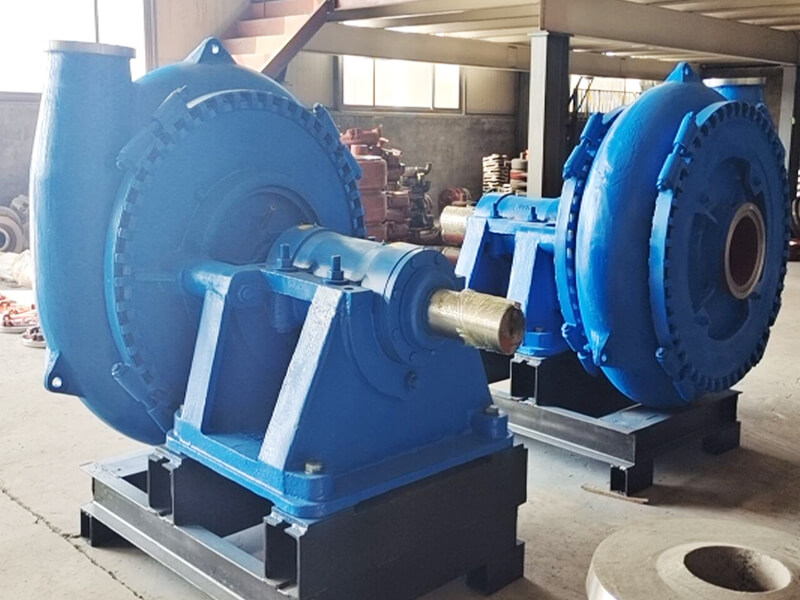
Dredge pumps can handle 6 main categories of slurry: river sand and silt, gravel and coarse sand, lake sediment, mine tailings, sewage sludge, and coal slurry or fly ash. Selecting the appropriate pump model requires considering key parameters such as slurry characteristics, flow rate, solids concentration, and corrosivity.
What is a slurry?
A slurry is a mixture of solid particles and water. It does not flow as freely as clear water; instead, it exists in a dense state—somewhere between a liquid and a solid. Because it contains solids, a slurry places far greater demands on a pump than the transport of ordinary water.
Types of slurry:
Based on factors such as solids content, particle characteristics, and the degree of abrasiveness, slurries can be categorized into three types: light-duty, medium-duty, and heavy-duty.
- Light-duty slurry: Contains fine particles with low abrasiveness, such as thin mud or silt, and is relatively easy to handle.
- Medium-duty slurry: Features a significantly higher solids content, which begins to cause noticeable wear on the pump.
- Heavy-duty slurry: Contains a high concentration of coarse particles, such as a mixture of sand and gravel—which causes substantial wear on the equipment. This represents the most challenging operating environment for a dredging pump.
What Is a Dredge Pump?
Definition:
A dredge pump is a type of heavy-duty centrifugal pump specifically designed to transport high-concentration solid-liquid mixtures. It operates by using a rotating impeller to generate centrifugal force, imparting sufficient kinetic energy to the slurry to enable long-distance transport. While its working principle is similar to that of a standard water pump, a dredge pump features wider impeller channels and a thicker pump casing. Furthermore, its flow-path components are typically constructed from high-chromium alloys or lined with rubber, allowing them to better withstand the continuous impact and abrasion caused by solid particles.
Core Function:
Their core function is to handle media containing solid particles, a task standard water pumps struggle with. Whether for port dredging, river desilting, or the transport of mine tailings, dredge pumps are capable of reliably handling slurries with a solids content exceeding 20%.
6 Major Types of Slurry Handled by Dredge Pumps
1. River Sand and Silt
This type of slurry is most commonly encountered during river dredging. The particles typically range from 1 to 10 mm in size, with a moderate solids concentration. River sand features uniform particle size and good flowability, causing relatively mild wear on pumps. Silt is finer and softer, and often occurs alongside clay, requiring pumps with strong suction and anti-clogging capabilities. These slurries are common in river desilting and waterway maintenance, the primary application for dredging pumps.
2. Gravel and Coarse Sand
With larger particle sizes (10–50 mm), these materials can easily cause pump clogging or impeller damage. To handle such conditions, dredging pumps are designed with wide flow passages and open-type impellers, allowing large particles to pass through smoothly without becoming lodged, thereby effectively reducing the risk of blockages. This type is primarily used in port expansion, sand and gravel operations, coastal land reclamation, and infrastructure construction projects.
3. Lake/Reservoir Bottom Sediments
Unlike river sand, long-term underwater sediments contain high levels of organic humus, resulting in high viscosity and poor flowability. During pumping, the slurry tends to adhere to pipe walls and impellers, accumulating over time. When dealing with such media, it is essential to use dredging pumps specifically designed with robust anti-clogging and anti-entanglement features.
4. Mine Tailings
Tailings slurry has a high solid content, often between 40% and 70%. Although the particles are fine, they have extremely strong abrasive power. Furthermore, the slurry may contain acidic chemical agents, which cause dual-action corrosion to metal components. Therefore, heavy-duty dredging pumps with high chromium alloy or composite linings should be selected, which are generally suitable for tailings dam backfilling and beneficiation plant transportation.
5. Sewage Sludge
Sludge from wastewater treatment plants has a complex composition, often containing rags, fibers, and other debris that can easily entangle and jam the impeller. When handling such high-viscosity sewage sludge, dredging pumps must be equipped with anti-entanglement impeller designs. This application is most common in municipal wastewater treatment plants and industrial wastewater treatment facilities.
6. Coal Slurry/Fly Ash
In coal-fired power plants, coal slurry is composed of crushed coal mixed with a binding agent (such as cement); its particles are relatively coarse yet fairly uniform. Fly ash, a byproduct of coal combustion, consists of fine, exceptionally hard particles. Transporting such slurries typically requires long pipeline systems, placing high demands on both the pump’s head capacity and its wear resistance. Therefore, dredging pumps must have wear-resistant and corrosion-resistant properties to ensure stable operation under harsh working conditions.
Dredge pumps can handle a remarkably diverse range of slurries, from river sand and silt to mine tailings. However, the ability to handle these media depends on your understanding of the characteristics of the mud and the correct matching of key parameters such as flow rate, head, and particle size. If your project is currently facing challenges related to slurry handling, please reach out to us; we would be happy to develop a customized pumping solution tailored to your needs.


 English
  Español
  Português
  Русский
  Français